
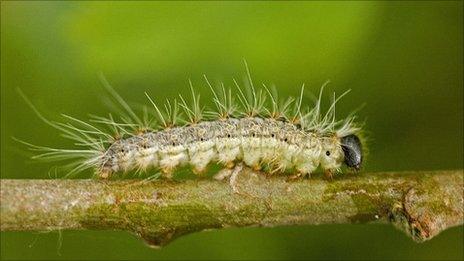
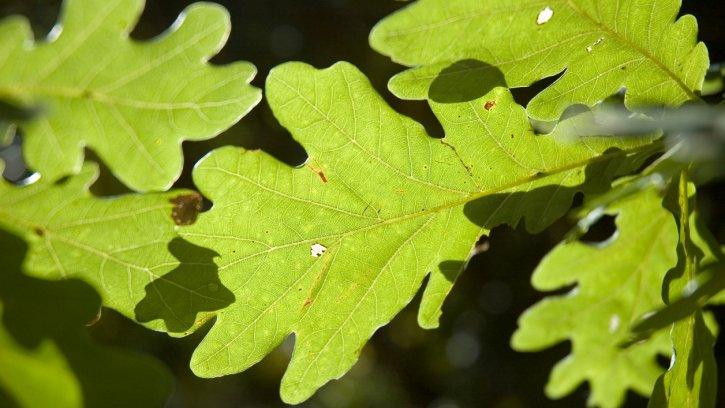
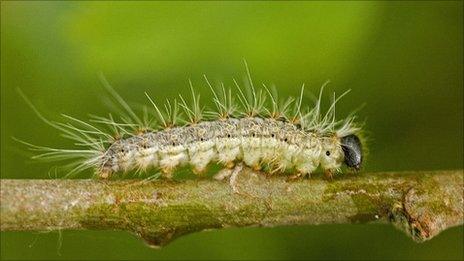
The oak processionary moth caterpillar feeds on oak leaves
Parts of Sulham Woods in Reading were closed off earlier while aerial spraying to eradicate a toxic caterpillar was carried out.
The Forestry Commission sprayed 2.6 hectares (6.5 acres) with insecticide to kill off the oak processionary moth.
The commission said the closure was a safety precaution but that the spray was not known to cause any harm to humans or most animals.
Wildlife groups condemned the spraying, saying it kills other insects.
The commission said access to the area was permitted again as the helicopter carrying out the spraying had left the scene.
Spraying carried out nearby in 2013 sparked an outcry.
A commission spokesman said it had found evidence the oak processionary moth, which damages oak trees and is harmful to humans, was still present.
He said the bacterial agent used in the spray, Bacillus thuringiensis, was "not known to cause any harm to humans or most animals."
Mark Parsons, from Butterfly Conservation, said he was "extremely disappointed" the aerial spraying method was being carried out again.
The group said the treatment would kill the caterpillars of all the butterflies and moths present, at a time when birds are feeding their young.
A Freedom of Information request showed Natural England also had concerns about the method.
- Published1 May 2014
- Published13 November 2013
- Published21 October 2013
- Published15 May 2013

- Published7 May 2013
- Published18 May 2012
- Published1 May 2012
- Published27 January 2012
- Published18 April 2011


