
Dr Zoe Fritz found that patients with Do Not Attempt to Resuscitate Orders "were getting worse care"
New guidelines that aim to improve end of life care could be issued nationwide following a trial in hospitals in the East of England.
Dr Zoe Fritz, who oversaw the project, said the current "ad hoc" arrangement often led to an "undignified death".
She wants nationwide guidelines, based on what was trialled, covering Do Not Attempt to Resuscitate Orders (DNAR).
"We found that doctors found it easier to have decisions and most importantly patients got better care," she said.
Legally, doctors do not need patient consent to issue a DNAR, but they must have consulted the patient beforehand.

Dr Zoe Fritz has developed a new treatment form for patients, which she hopes will be picked up nationally
Dr Fritz, a consultant physician who has studied DNARs at Addenbrooke's in Cambridge and at the West Suffolk Hospital, said: "Different doctors have different ways of deciding when someone should be for resuscitation.
"The worst case is you start [to resuscitate] and someone who has had a peaceful death then wakes up briefly to find all these people around them, tubes in them, blood everywhere and then dies.
"And unfortunately I've seen that on more than one occasion."
The number of DNAR hospital complaints in the East of England has risen from seven in 2012 to 45 in 2014.

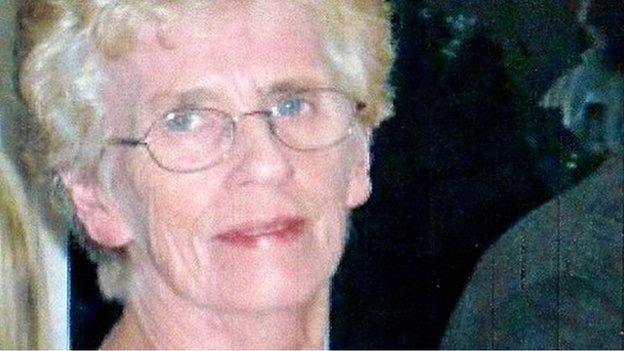
Janet Tracey, who had terminal lung cancer, died in 2011
A year ago, a Hertfordshire family took their DNAR complaint to the Court of Appeal.
In a landmark judgement, the court ruled that the human rights of Janet Tracey were violated when she was placed under a DNAR order at Addenbrooke's without consultation.
The judgment said doctors had a legal duty to consult with and inform patients if they wanted to place a DNAR order on medical notes.
Merry Varney, the family's solicitor, said: "The message about ensuring that patients and family have the information in advance about when these decisions are necessary and why they are made... is simply not being translated into practice everywhere."

Mrs Tracey's family said after the hearing they felt a "wrong done to Janet has been recognised by the court"
Dr Fritz, who said her studies showed that people with a DNAR "were getting worse care", believes a new approach is required, and hopes a new end of life treatment form will be adopted nationwide.
"Instead of having a piece of paper in front of the notes, which was how resuscitate decisions were documented, saying Do Not Resuscitate, we had a form that said what you are going to do.
"We said we're going to focus on what treatment should be given and we're always going to contextualise resuscitation with an overall goal of care.
"Turning it on its head and saying what are we going to do for this patient made it much easier for doctors and patients to think about what's best for them."
The universal treatment form will form a key part of a much wider review of end of life care now being carried nationally.
- Published17 June 2014
- Published8 May 2014

