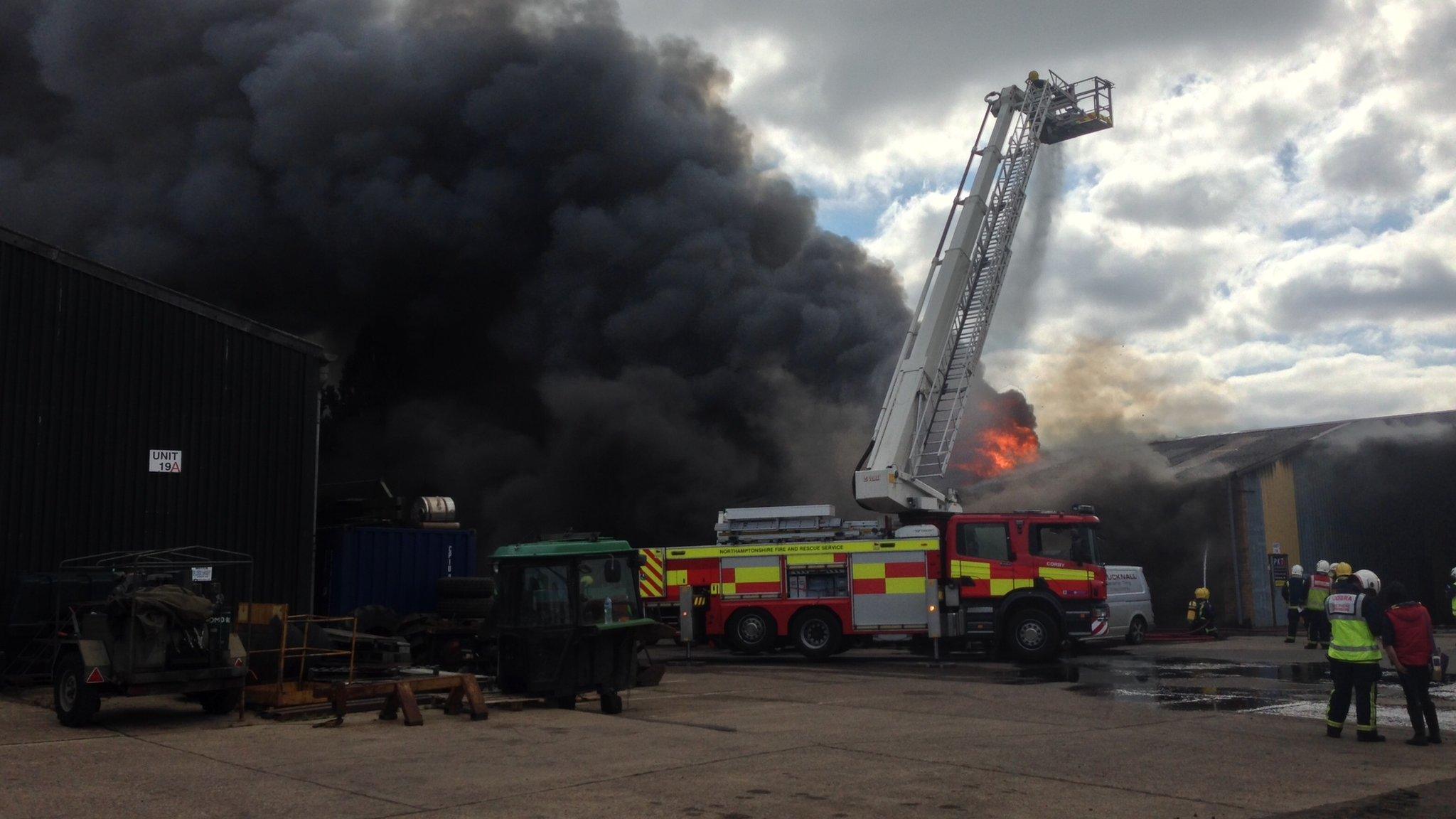
Fire alarms in offices, shops, factories and public buildings only get a fire service response if a fire is confirmed
Claims of a 66% cut in the number of fire alarm call-outs have been criticised after it emerged the number was achieved by crews not being sent.
Northamptonshire fire crews attended 2,741 false fire alarms in 2008-09,
Last year, this number dropped to 969 - a "fantastic" achievement, according to Northamptonshire County Council.
But the fall is the result of a policy change - labelled "concerning" by the Labour opposition - in which crews no longer attend all alarms.
The unwanted fire alarms happen when an automatic fire detection system is activated even though a fire has not occurred.
Following the policy change, crews in Northamptonshire only respond to automated fire alarms without a fire having to be confirmed first in domestic properties, where there is a sleeping risk such as in care homes, hospitals at night, when sprinklers have been activated or in premises deemed at "special risk".
'Genuine emergencies'
Fire alarms in all other premises such as offices, shops, factories and public buildings only get a response if a fire is confirmed.
Labour county councillor Mick Scrimshaw said: "I still run a small business and so am very concerned, as I am with the cuts in service in general within the fire service."
But André Gonzalez de Savage, Conservative-controlled Northamptonshire County Council's cabinet member for public protection, said: "Unwanted fire signals used to account for about 30% of all incidents Northamptonshire Fire and Rescue Service attended and these unnecessary call-outs have a serious impact as they divert firefighters from genuine emergencies.
"The fire service has done a fantastic job in reducing the number of unwanted fire signals to below 1,000 a year for the first time ever and this leaves our firefighters free to respond to genuine, potentially life-saving incidents."
- Published21 March 2015

- Published16 July 2014