Nasa: Nasa to name headquarters after Mary Jackson
- Published

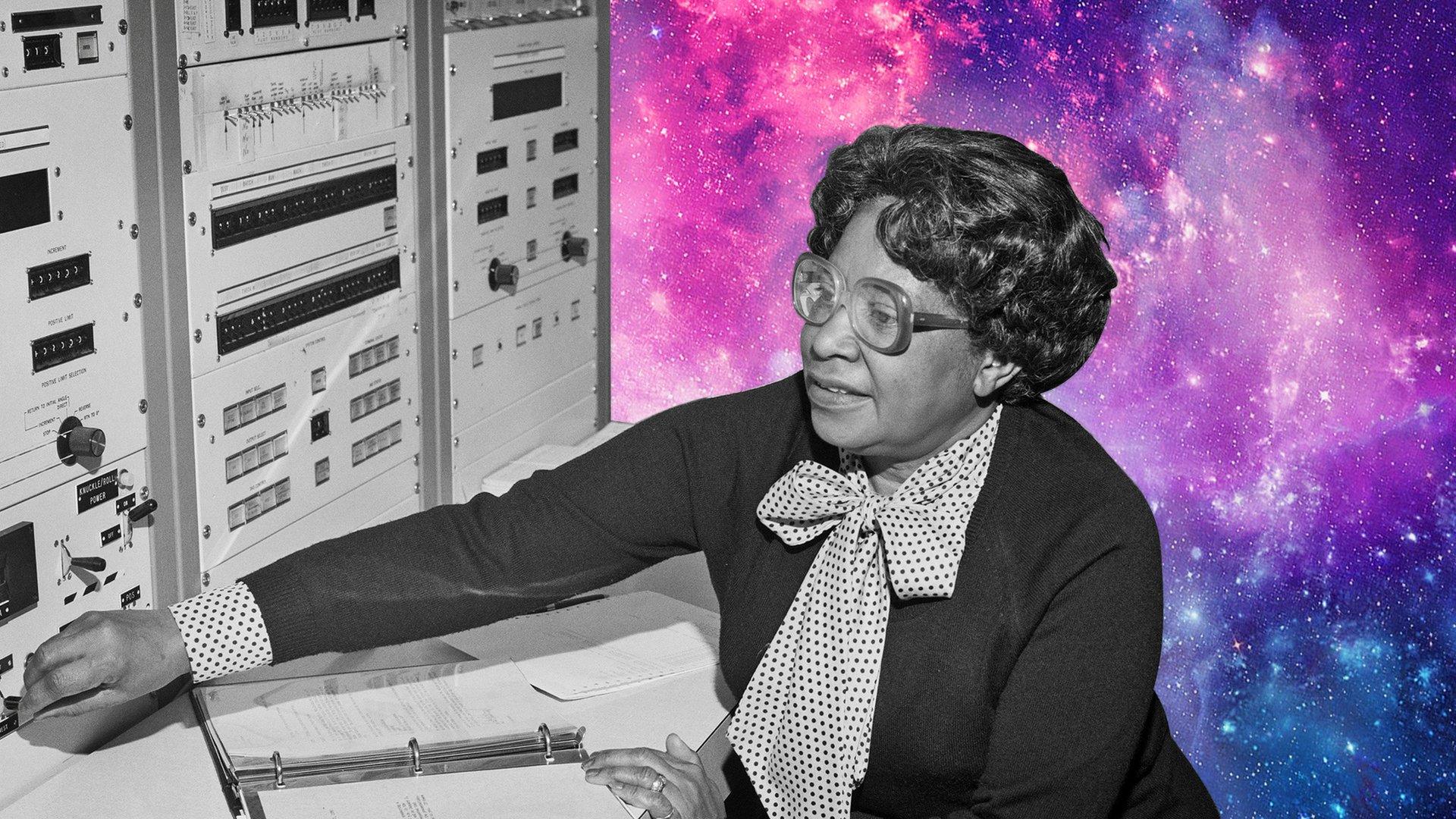
Mary Jackson became Nasa's first black female engineer in 1958
Nasa is going to name its headquarters in Washington DC after its first female black engineer, Mary Jackson.
A Nasa spokesperson said Jackson had helped to break down barriers for African Americans and women in engineering and technology.
She joined US space programme in 1951 and went on to lead programs influencing the hiring and promotion of women in NASA's science, technology, engineering, and mathematics careers.
Jackson - who died in 2005 - was one of the subjects of the 2016 film, Hidden Figures, which looked at the role of American American women at Nasa during the 1960s.
In 2019, the street outside the headquarters of Nasa was renamed Hidden Figures way.

Who was Mary Jackson?
Mary Winston was born on April 9, 1921 and went to an all-black school followed by Hampton University in her home state of Virginia.
Nasa began recruiting some college-educated African American women in the 1940s as "human computers", but they experienced discrimination at work both because of the colour of their skin and because they were women.
In 1951, Mary was hired by the National Advisory Committee for Aeronautics which was succeeded by Nasa. She worked under Dorothy Vaughan - whose story was also told in the film, Hidden Figures - in the West Area Computing Unit.
The Unit, like many parts of America, was segregated - which means black and white workers were kept apart.
She was promoted to aerospace engineer in 1958, and became NASA's first black female engineer.
By 1979, Jackson had achieved the most senior job in the engineering department before changing roles to help grow equal opportunities in Nasa for women and other minorities.
Hidden no more, we will continue to recognise the contributions of women, African Americans, and people of all backgrounds who have made Nasa's successful history of exploration possible.

"Mary W Jackson was part of a group of very important women who helped Nasa succeed in getting American astronauts into space," said Nasa administrator Jim Bridenstine.
"Mary never accepted the status quo, she helped break barriers and open opportunities for African Americans and women in the field of engineering and technology."
Mary Jackson died in 2005 and in 2019 she was awarded the Congressional Gold Medal, one of America's highest awards.
Her daughter, Carolyn Lewis, said the family was honoured that Nasa was continuing to celebrate Mary.
"She was a scientist, humanitarian, wife, mother, and trailblazer who paved the way for thousands of others to succeed, not only at Nasa, but throughout this nation,"
Who were the other hidden figures?

Besides Katherine, Dorothy and Mary - there were hundreds of other African-American women who worked at Nasa during the 60s. Annie Easley was one of the first African-Americans to work as a computer scientist at Nasa.
Throughout history, women and African-American women in particular have faced a lot of prejudice in scientific fields.
During the 1960s, Nasa often employed women as 'computers' and expected them to do lots of calculations to help out with various projects.
This was before machines could do these calculations automatically using code.
These women were often disrespected and not credited for their work.
Mary Jackson was one of these women.
- Published1 June 2020
- Published13 June 2019