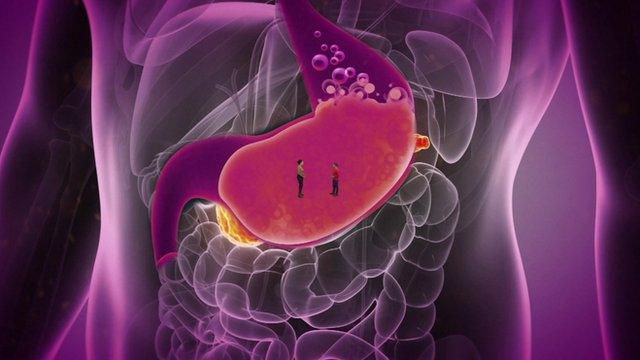
Young people cooking and eating as a family more during lockdown
- Published

Changes in young people's eating habits, tracked during lockdown in England, show increases in both snacking and a rise in families eating together.
Researchers found 60% of young people thought enjoying more family meal times together was positive for their health and wellbeing.
Young people in the study said they wanted to keep having meals together after the lockdown lifted.
One girl who replied to the survey said: "Food during this period allowed me to reconnect with members of my family, we have been cooking together and enjoying meals together."
More than 1,000 14-19 year-olds took part in the research, which was carried out by the Guy's and St Thomas's Charity and Bite Back 2030, a healthy eating charity. They have produced a report based on the report called Hungry for Change.
A third of children and young people said they had been cooking more frequently. However, many were to taking on the extra responsibility to support key worker single parents, rather than cooking for enjoyment.

Despite more home cooked meals, lockdown measures like being unable to see friends and the structure normally provided by school has potentially led to a 40% increase in snacking.
The report described snacking as the biggest negative consequence of Covid-19 lockdown when it came to eating habits.
While children from well-off backgrounds had more fruit-based snacks, many others were "grazing" on unhealthy foods like crisps and chocolate.
The responses also revealed children from less well-off backgrounds had eaten more junk food and take-away food during lockdown.
Last month a campaign by a 16-year-old called Christina, and backed by footballer Marcus Rashford, persuaded the government to provide food vouchers for children on free school meals, over the summer holidays.
Christina is also the youth co-chair of Bite Back 2030, who put together the report on lockdown eating habits
Many children also said they'd become more aware of the gap between rich and poor when it comes to diet.
Will the government make changes?
Bite Back 2030 and the Guy's and St Thomas's Charity have produced a report based on the research called Hungry for Change.
The report makes five recommendations to the government ahead of an expected announcement this month on new measures to tackle obesity.
It said: "Lockdown has prompted a period of reflection especially from young people.
"It has also highlighted the inequalities that blight the food system, including the struggle that children, particularly those living in lower income areas, face in accessing nutritious food."
1. Ensure no child goes without a decent meal in the school holidays, no matter where they live.
2. Make healthy foods cheaper than unhealthy foods.
3. Make it easier to access drinking water, wherever they are.
4. When it comes to advertising: put healthy options centre stage, and take the spotlight off junk food.
5. Redesign the high street to include healthy, safe spaces to hang out.
- Published16 September 2019
- Published3 September 2019
- Published23 January 2020

- Published24 March 2015