
Supply chains: New plan announced to help with lorry driver shortage
- Published
Supply chains: What are they and why are they so important?
The government is planning to allow foreign lorry drivers to make more deliveries in the UK, to try to tackle the supply chain problems.
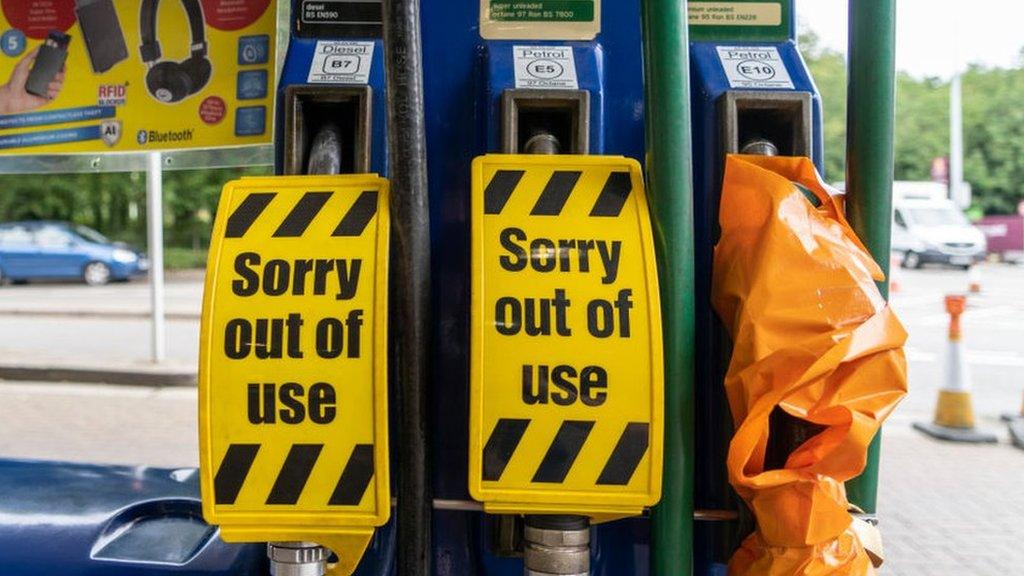
In recent months there has been disruption to deliveries of fuel, food and clothing as the lack of lorry drivers has meant they haven't been delivered to petrol stations, restaurants and shops fast enough.
Currently, drivers coming from the EU can only make two trips to deliver goods each week - but the government wants to change this so they can make as many trips as they need within a two week period.
Ministers hope these proposed changes can happen by Christmas, but they still need to be approved.
Some UK drivers are worried they might lose work to cheaper EU rivals if they do come into force.
What is the problem?

The UK's lorry driver shortage is thought to have been caused by an number of issues including Covid, Brexit and other factors.
Large shipping containers carrying good and supplies have been left waiting at Felixstowe Port unable to be moved and unloaded.
The port handles 36 percent of the UK's freight container traffic, and has blamed the busy pre-Christmas period and haulage shortages.

Last month, the government announced it would grant up to 5,000 temporary visas for HGV drivers from abroad.
But so far only a very small number have been issued, and the first foreign drivers to use the scheme may not even arrive for another month.
This new announcement means that the government plans to go further.
How would the new rule change things?

Something called cabotage rules set out how many jobs a delivery driver can make in a foreign country.
The government plans to temporarily alter these rules so that foreign HGV drivers that come into the country with goods, can pick up and drop off items an unlimited number of times for two weeks before they return home.
But the changes still need to be approved.

Vehicles queue for fuel at a Sainsbury's petrol station in Weymouth
There will be a one-week consultation period - but if passed the government says the rules will come into force "towards the end of this year for up to six months".
It would mean thousands more HGV deliveries each month, the government said, so more goods - especially food and items that come via ports - can get delivered on schedule.
But the haulage industry expressed concern with British delivery companies and some drivers are worried that their work could be passed to cheaper EU firms.
- Published30 September 2021
- Published2 July 2021

- Published1 October 2021


