George Alagiah: 'Brilliant broadcaster' dies aged 67
- Published

George Alagiah was a familiar face on British TV news for more than three decades
George Alagiah, described as one of the BBC's "most highly-respected journalists", has died aged 67.
As a presenter and journalist for BBC News for more than thirty years George reported from around the world - often from areas affected by war.
His reports for Newsround, from countries such as Afghanistan and Rwanda, helped explain how children are affected by conflict.
Many people have paid tribute following a statement from George's agent saying the broadcaster died peacefully "surrounded by his family and loved ones".
What was George Alagiah best known for?

Alagiah reporting from outside the Houses of Parliament the day after the 2010 General Election
George presented the BBC News at Six on TV for more than 20 years.
Before then he was an award-winning foreign correspondent, travelling to countries such as Rwanda and Iraq, often at times of conflict.
He won awards for his reports from Somalia during the early 1990s, explaining how ordinary people were being affected by famine and war in the country.
In 1994 George was nominated for a Bafta for his story about the Iraqi leader Saddam Hussein.
In the same year he was named Amnesty International (a charity that aims to protect people's rights) journalist of the year for coverage of the civil war in Burundi, East Africa, and was the first BBC journalist to report on mass killings in Rwanda.
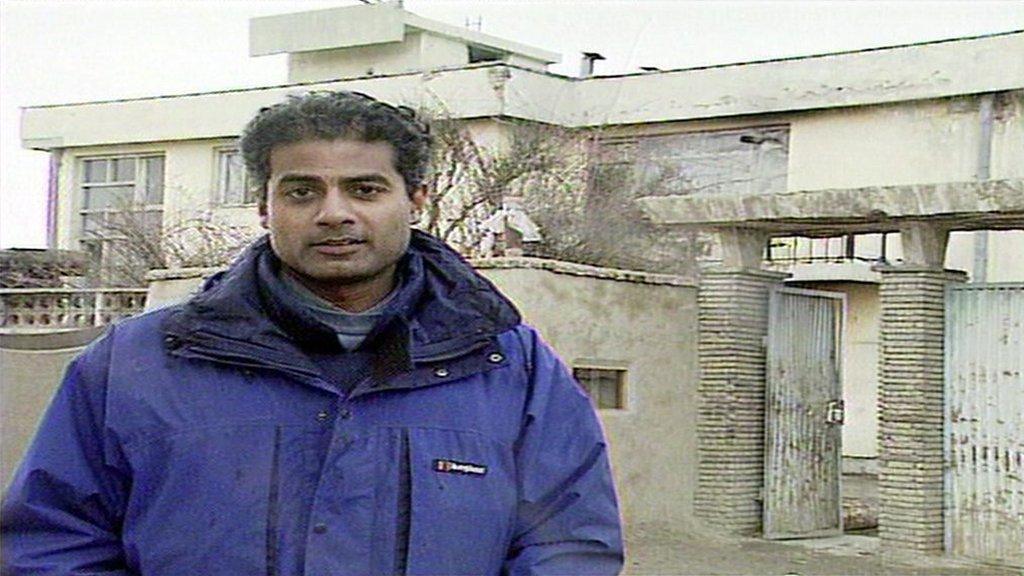
George Alagiah reports for Newsround
George's report for Newsround from Afghanistan explained how war affected children in the country
In 1994 the journalist worked with Newsround to report on the conflict from Afghanistan, helping viewers to understand more about what was happening in the country at that time.
In 2014 he filmed a special report for Newsround from Rwanda marking 20 years since the genocide - a horrific event in which hundreds of thousands of people were killed.
We look back on the terrible events that happened in Rwanda twenty years ago and remember those who were lost.
As a child George experienced life in a country caught in conflict
Born in the Sri Lankan capital of Colombo in 1955, his family moved to Ghana in West Africa when he was just six years old to escape violence in Sri Lanka. They later moved to England when he was 11.
In the past George spoke about experiencing racism at boarding school in England, as one of the only boys there who wasn't white.
At Durham university he met his wife, Frances Roberthan, with whom he has two children.
Tributes paid to 'brave' and 'deeply loved' journalist
BBC director general Tim Davie said: "Across the BBC, we are all incredibly sad to hear the news about George. We are thinking of his family at this time.
George was one of the best and bravest journalists of his generation who reported fearlessly from across the world as well as presenting the news flawlessly.
"He was more than just an outstanding journalist, audiences could sense his kindness, empathy and wonderful humanity. He was loved by all and we will miss him enormously."
BBC World Affairs editor John Simpson tweeted: "A gentler, kinder, more insightful and braver friend and colleague it would be hard to find."
Former BBC North American editor Jon Sopel wrote: "Tributes will rightly be paid to a fantastic journalist and brilliant broadcaster - but George was the most decent, principled, kindest, most honourable man I have ever worked with. What a loss."

Alagiah was appointed an OBE for services to journalism in 2008
The journalist who 'inspired' British Asian reporters
Journalists from outside the BBC also praised him with LBC's Sangita Myska speaking of his influence on British Asian reporters.
She said: "Growing up, when the BBC's George Alagiah was on TV my dad would shout "George is on!".
We'd run to watch the man who inspired a generation of British Asian journalists. That scene was replicated across the U.K. We thank you, George. RIP xx"
Radio 4 presenter Mishal Husain said George was "the first Asian foreign correspondent I had seen on British television.
"He inspired so many of us," she added.
George was deeply loved by everybody who knew him, whether it was a friend, a colleague or a member of the public.
The presenter died of bowel cancer after being diagnosed with the disease in 2014.
During his career George interviewed many famous world figures including then South African President Nelson Mandela, Archbishop Desmond Tutu, UN Secretary General Kofi Annan and President Robert Mugabe of Zimbabwe.
He received an OBE (Order of the British Empire) for services to journalism in 2008.
- Published7 April 2014

- Published24 July 2023