Ordinary things and their creepy connotations
Graveyards, witches and spiders - these are just a handful of things that have become synonymous with horror. But while certain things have established themselves as a staple of the spooky season, others can seem eerie for no obvious reason at all.
But why is this the case? And what about them makes them give us the creeps?
BBC Bitesize previously spoke to Dr Coltan Scrivner, a behavioural scientist and horror expert at Aarhus University in Denmark and Arizona State University in the US, to find out why ordinary things can sometimes have creepy connotations.Warning - our list includes several things you may or may not find creepy.
What makes something creepy?
The sensation of creepiness is a very common human experience. Dr Scrivner previously told BBC Bitesize: "It’s a feeling that I think almost anybody can resonate with. If you say you’re creeped out, most people will know exactly what you mean.”
However, the first recorded use of the word only occurred during the mid 19th century. The Victorian writer Charles Dickens is believed to have first coined and popularised the term ‘the creeps’. He used the phrase in his 1849 novel David Copperfield to describe an unpleasant, tingly chill up the spine.
But the reasoning behind this fear factor is far from well-researched. One of the first practical studies of creepiness was led by Knox College in the US and took place in 2015. The paper, which investigated the psychological nature of creepiness, concluded that things that are creepy tend to be ambiguously threatening.
For instance, while some things, like a chase scene in a horror movie, pose an obvious threat, other things, such as clowns, aren’t clearly dangerous. It’s in this grey area that the feeling of creepiness is believed to arise.
What ordinary things give us the creeps?
What people find creepy is generally culturally dependent, but some things may be creepier than others. Dr Scrivner notes that dolls and clowns often top the list for creepiest things.
He said: "Clowns are meant to be an innocent thing." But sometimes they may also do something that our brain interprets as potentially malevolent.
One of these signals includes painting their faces. Clowns often paint on smiles, but in films and TV the dangerous ones tend to paint on frowns. “This sends mixed ideas about whether they’re actually safe,” Dr Scrivner explained.
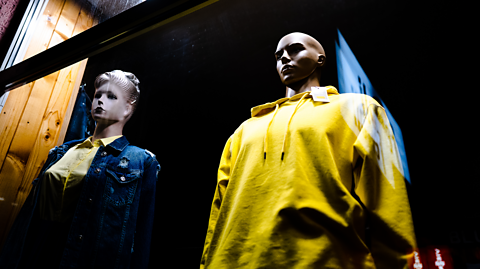
The mannequin is another example. Go into any clothing shop and you’re likely to see a number of mannequins on display. But why do they sometimes give people the creeps?
Many scholars attribute this fear-factor to the uncanny valley phenomenon. Uncanny valley is a psychological term used to describe the unsettling feeling that occurs in some people in response to ‘almost’ human figures. Just like dolls and clowns, mannequins share a lot of similarities to humans - and yet they aren’t.
Their creepy factor is so strong that they have become a perfect candidate for some spooky TV moments. When Doctor Who was revived by Russell T Davies in 2005, the first monsters to be featured were mannequin-like life forms called Autons, which had previously appeared in the 1970s.
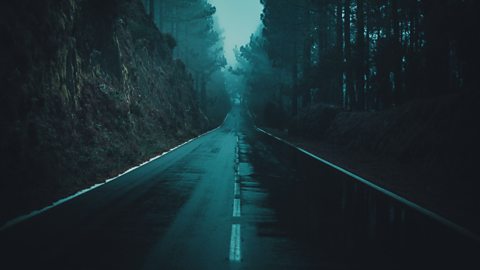
Some people find ambiguous threat in landscapes. Sometimes, a forest or a seemingly endless stretch of road can make us feel unsettled. While the setting itself doesn’t provoke fear, the fact that nobody is around provides a subtle cue of potential trouble.
Being aware of your own solitude can also raise creepy-related concerns. As Dr Scrivner told us, “Humans are social creatures so if you’re out by yourself and you see no one is there, it’s a great question to ask, ‘Why is nobody else here? Is there something wrong with this place? Is it dangerous?’”
Why can sound be creepy?
Sounds and music - or lack of it - can also induce the creeps. Dr Scrivner explained: “We use sound to cue ourselves into things.”
One of these instances could be a squeaky door, something often linked with the haunted house trope. He continued: “When a door creaks open that’s only creepy when you’re by yourself. It signals that something or someone may be be pushing it slowly.”
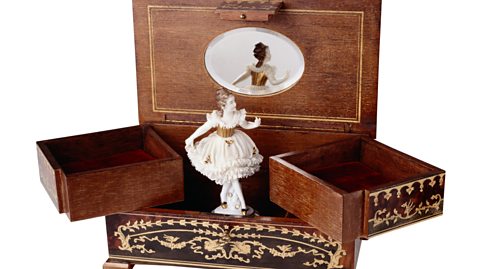
Music boxes are another sound-related staple in horror and have featured in many films including The Woman in Black,Pirates of the Caribbean 2 and Labyrinth. Their presence is often followed by a A technique typically used in horror films or video games that shocks or scares you so you suddenly move or jump. and therefore we may have trained ourselves to think they are signalling something dangerous.
Some scholars believe that the creepiness of some sounds may be wired into our biology. Non-linear sounds are sounds that are too loud for the ordinary musical range of an instrument or an animal’s vocal cords, for example the screech of a violin or a baby’s cry. These types of sounds can often trigger our emotional response and frighten us. Yikes!
This article was published in September 2023 and updated in September 2026
