Goodbyepublished at 17:00
 James Law
BBC News
Our rolling coverage of coronavirus updates across England are coming to an end for the day.
We will be back from 09:00 BST on Sunday with the latest news and guidance.
Thank you for joining us.
Countryside littering by Yorkshire day-trippers 'alarming and unfair'
Isle of Wight MP admits lockdown 'barbecue' visit
Prosecutors to review Covid-19 death of station worker
Latest updates on Saturday, 6 June
James Law
BBC News
Our rolling coverage of coronavirus updates across England are coming to an end for the day.
We will be back from 09:00 BST on Sunday with the latest news and guidance.
Thank you for joining us.
Chelsea manager Emma Hayes is confident women's football will come back "bigger, stronger and better" following the coronavirus outbreak.
The Women's Super League season was halted in March and ended on 25 May, with the Blues awarded the WSL title on a points-per-game ratio on Friday.
 Image source, Getty Images
Hayes said ending the season early was the "right decision", with player welfare a key factor.
"Just because it didn't resume doesn't mean we're under threat or at risk. I trust in the people running the league and believe we'll come back bigger, stronger and better," Hayes, 43, said.
NHS trusts in England were not consulted before the government announced changes to the use of face coverings in hospitals, the chief executive of NHS Providers has said.
Chris Hopson said trust leaders felt "completely in the dark" about the "significant and complex" changes.
 Image source, AFP/Getty Images
From 15 June, hospital visitors and outpatients must wear face coverings and staff must use surgical masks.
A Department of Health spokeswoman said while the public were "strongly urged" to wear a face covering while inside hospitals, no-one would be denied care.
About 15,000 people have gathered for a rally in Manchester over the death of George Floyd, despite warnings not to assemble due to concerns that coronavirus is spreading again.
Campaigners attended the protest in Piccadilly Gardens, while another one is planned for Sunday.

Mayor Andy Burnham said the demonstration posed a "high risk" while scientists have raised concerns the R number - the average number of people who can catch a virus from an infected person - is creeping up again nationwide.
Mr Burnham said: "While I understand people's wish go to protest against what's been happening in the USA and send that message of solidarity, that can be done in different ways.
"It is not at all ideal... to be gathering in these circumstances when we still face a very high risk."
Darts player Nathan Aspinall made a trophy out of a dinner plate to celebrate winning the PDC Home Tour title.
The Englishman, 28, wrote his name on a plate and held it aloft before diving in his hot tub.
 Image source, PDC
"It's permanent marker so it's going in the bin after this, but there's my little trophy for the night," he said.
The tournament, which featured more than 100 PDC tour card holders filmed at home on their mobile phones, was set up after events were cancelled because of the coronavirus pandemic.
We reported earlier that the World Health Organization (WHO) has changed its advice on face masks and coverings, saying they should be worn in public to help stop the spread of coronavirus.
But if you wear your face covering incorrectly, you could actually be putting yourself more at risk.
Here, the BBC's Laura Foster and Tobias Chapple explain why.
Coronavirus and face coverings: the correct way to wear them
Also, see our guide to different types of face coverings and step-by-step instructions on how to make them.

There have been more than 280,000 confirmed cases of coronavirus in the UK and some 40,000 people have lost their lives, government figures show.
You can find out how the pandemic has affected your area and how it compares with the national average
 Image source, Getty Images
Solidarity protests about the death of George Floyd in the US are continuing to take place across England, despite the Health Secretary Matt Hancock and the Metropolitan Police Commissioner Dame Cressida Dick asking people not to attend.
So are such demonstrations actually legal given the coronavirus lockdown?
Our home affairs correspondent Dominic Casciani looks at what the lockdown laws say about protests, the penalties you could face for taking part and where it leaves the police.
As the world races to find treatments and vaccines for coronavirus, scientists have another target in their sites - the superspreading event, when one person infects many others.
The k number is key to understanding why that happens, measuring the difference in how many people each person with coronavirus infects.

The smaller the k number is, the lower the number of people who are transmitting the disease to others is. This means more superspreaders, each individually infecting higher numbers of people.
About 10-15% of people are responsible for about 80% of infections, according to an expert.
 Image source, Alex Wright
My Money is a series looking at how people spend their money - and the sometimes tough decisions they have to make. Alex Wright, from Leicester, takes us through a week in his life during the coronavirus pandemic.
The 29-year-old is a venue manager of a gaming arcade and earns £25,000 a year. However, he has been placed on furlough since March.
His partner Rebekah is an NHS nurse and has recently started maternity leave following the birth of their twin daughters, Eden and Indie, last week. They also have two sons, Rory, five and Casper, four.
See how he and his family fared financially during a week that included a picnic and DIY tasks.
Crowds have begun to gather as protests over the death of George Floyd get under way.
Protesters have been told to avoid mass gatherings amid the coronavirus pandemic. Met Police Commissioner Cressida Dick said protests were "unlawful" under current restrictions and Home Secretary Priti Patel said not attending was "for the safety of all of us".
 Image source, Reuters
Demonstrators have congregated in London's Parliament Square and gatherings are planned across the UK.
Greater Manchester Mayor Andy Burnham has warned that mass gatherings were "high risk" amid fears that coronavirus might be spreading again.
We have created "a perfect storm" for diseases from wildlife to spill over into humans and spread quickly around the world, scientists warn.
Human encroachment on the natural world speeds up that process, say global health experts who study how and where new diseases emerge.
 Image source, Science Photo Library
Scientists at the University of Liverpool have now developed a pattern-recognition system to predict which wildlife diseases pose most risk to humans, part of a global effort to develop ways to prepare better for future outbreaks.
"In the last 20 years, we've had six significant threats - Sars, Mers, Ebola, avian influenza and swine flu," Prof Matthew Baylis from the University of Liverpool told BBC News. "We dodged five bullets but the sixth got us.
"And this is not the last pandemic we are going to face, so we need to be looking more closely at wildlife disease."
The Royal Hospital in Chelsea - home of the Chelsea Pensioners - has been hosting its annual Founder's Day parade this week.
But it's been a more sombre and scaled back event than normal because of the pandemic.
Like many care homes it's been particularly hit hard with 10 of the Army veterans dying from the virus and dozens more infected.
For children across England going back to school, this is the first week of their "new normal".
Year 6 children have recorded video diaries so we can see through their eyes how this return to school life feels.

People across the country are being advised to wear face coverings in certain circumstances when out of the house, to help limit the spread of coronavirus. From 15 June, you must wear one on public transport in England.
While medical face masks and respirators are prioritised for health and care workers, you might want to try making your own face covering, wherever you live.
Here's our guide to different types and step-by-step instructions on how to make them.
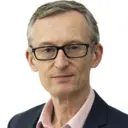 Fergus Walsh
Medical correspondent
 Image source, Getty Images
My experience of testing positive for coronavirus antibodies clearly struck a nerve. Two weeks ago I wrote that I'd had no recent symptoms but dismissed a bout of pneumonia in January because it was weeks before the first confirmed cases of Covid-19 in the UK.
Many of you responded with your own experiences of having Covid-like symptoms - some as far back as November - and urged me to investigate further.
But is it possible to prove when coronavirus first struck in the UK, and does it matter?
Healthcare workers have asked people to "think twice" to stay safe and help the NHS, as coronavirus lockdown restrictions are eased across the UK.
They star in a new work by Cambridgeshire poet Jude Simpson, who is look at how a post-lockdown UK, where social distancing becomes the new normal, might look.
"[Clap for carers] had been such a brilliant way for people to express their gratitude," said Ms Simpson.
"But at the same time some health workers were starting to think, 'it's all very well for you to applaud me on a Thursday night, but are you social distancing on a Friday morning?'"
Many schools in north-west England will delay reopening until at least 22 June over concerns the coronavirus infection rate is on the rise.
Schools in Blackburn said they would not reopen on Monday, as the government has urged, while Tameside Council "strongly" advised schools not to do so.
 Image source, AFP
Wirral Council has also urged schools to "pause" reopening plans while Health Secretary Matt Hancock said "there is a challenge" in the region.
Some scientists say the R number is creeping up across the country and may have surpassed one - the point at which the epidemic takes off again - in the region.
Ronnie O'Sullivan says he has "struggled" in the "bubble" surrounding snooker's Championship League tournament, which is being played behind closed doors and in a closed environment.
Snooker was the first sport to return to live action on free-to-air TV, following government guidance, which paved the way for competition to make a comeback from Monday.
 Image source, BBC Sport
The non-ranking event is taking place without fans at the Marshall Arena in Milton Keynes. It has an on-site hotel, where players must isolate in their rooms when they are not competing.
"If every tournament was to be like this then I am not sure I would be able to do it," said O'Sullivan, 44.
The mayor of Bristol says those taking part in Black Lives Matter protests this weekend should think about the possible health consequences of large rallies and demonstrations.
Marvin Rees says he agrees with the aims of the campaign but says there were other ways to protest - and suggested people follow the lead of the American footballer Colin Kaepernick who in 2016 started the practice of dropping to one knee during the national anthem to protest against racism.

"Covid is with us. We don't have a vaccine. And it's not the demonstration I have a problem with, it's any form of demonstration that requires a mass gathering," he told the BBC.
"Because my fear is a second wave will lead to a disproportionate loss of black and brown lives and any consequence of a further lockdown we know is also disproportionately impacting black and brown people - the lost jobs, the lost wages, the lost businesses, which, again, will have a health consequence."
