Summary

  • It's nine days since Hamas launched its deadly attacks on Israel, and Israel began its retaliatory campaign in Gaza

  • A fresh escalation is believed to be imminent as Israeli forces prepare for a ground offensive

  • Our team of reporters around the region are answering your questions from 15:00 to 18:00 BST (14:00 - 17:00 GMT)

  • Email HaveYourSay@bbc.co.uk or Whatsapp +44 7756 165803 with your questions

  1. A key moment in the warpublished at 18:21 BST 16 October 2023

    Yolande Knell
    BBC Middle East correspondent, reporting from Jerusalem
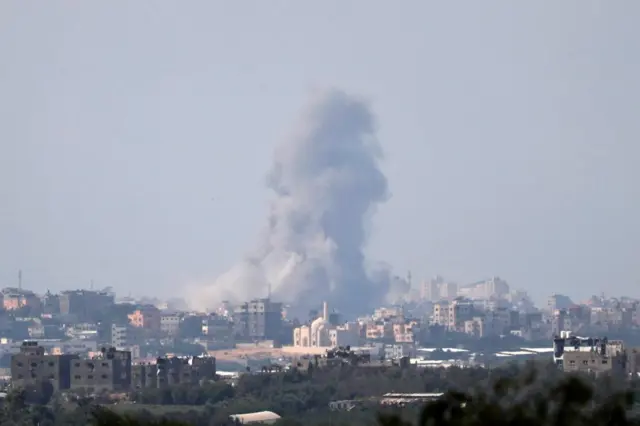
    Smoke rises from the town of Beit Lahia after Israeli airstrikes in northern Gaza on MondayImage source, EPA
    Image caption,

    Smoke rises from the town of Beit Lahia after Israeli airstrikes in northern Gaza on Monday

    BBC News has a slogan: “Live the story”.

    In this war, all of our local team are doing that, in extreme ways.

    Some have had those they know or love caught up in the atrocities committed by Hamas in Israel. While under siege and intense bombardment in Gaza, my colleagues are struggling to find water and food for their families.

    Today in the Jerusalem office we ran back to the air raid shelter as rockets flew overhead.

    It appears we are at a key moment in this war, as Israel prepares for a huge ground offensive to eradicate Hamas that looks set to be complicated and dangerous.

    Meanwhile, the clock is ticking to see if a deal can be done to allow aid into Gaza and prevent a bigger humanitarian catastrophe.

    What happens in the coming days could reshape the decades-old Israeli-Palestinian conflict and the lives of those of us based here.

  2. What is the UK's relationship with Israel?published at 18:03 BST 16 October 2023

    Frank Gardner
    Security correspondent

    And for our final question, Samantha asks: Why is the West so keen to maintain diplomatic relations with Israel, even in spite of its clear possible breaches to international law?

    Whatever anyone thinks of its policies and practices, Israel is a sovereign nation.

    The UK even has diplomatic relations with North Korea, Iran and Russia - all nations which have been widely accused of breaching either international law or UN Security Council Resolutions.

    Breaking off diplomatic relations is a last-resort step and tends to only happen in extreme cases, such as when Iranian mobs stormed the British then Saudi embassies in Tehran.

    There is though, a deeper issue here which you may be alluding to, Samantha.

    After the horrors of the Holocaust in which 6 million Jews were murdered, Western nations felt a moral obligation to provide and support a nation where Jews could live in safety.

    That led to the creation of the State of Israel in 1948. But several wars with its neighbours since - coupled with the steady encroachment of Jewish settlements on occupied land in the West Bank, and intermittent attacks by Hamas and others - have undermined any hopes of a lasting peace.

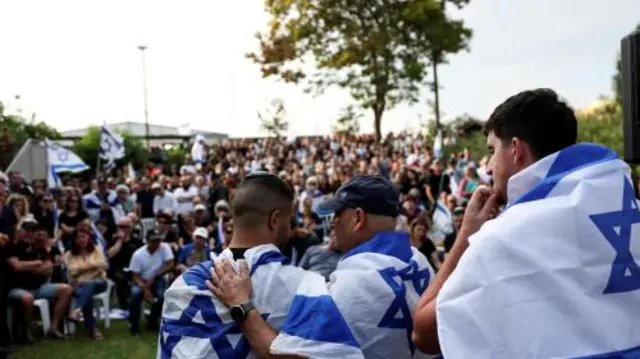
    Crowds of people. In front, three stand with their backs to the camera wearing flags of Israel on their backsImage source, Reuters
  3. Has Hamas committed a war crime?published at 17:55 BST 16 October 2023

    Paul Adams
    World Affairs correspondent

    Following on from Radha, here's another question on Hamas from Simon in the UK: The world issued an international arrest warrant against Putin for the war crimes committed in Ukraine. Why has there not been the same response against Hamas leadership? Was this not a war crime on a massive scale?

    Israel did not consider itself at war with Hamas before 7 October, despite previous rounds of conflict stretching back many years.

    For Israel, this was an act of terrorism, not war.

    Benjamin Netanyahu’s government is pursuing justice in its own way and has already killed at least two Hamas commanders it regards as responsible for the massacres of 7 October.

    It will doubtless attempt to kill many more.

    Questions may arise about the organisation’s political leadership - which lives in Qatar and Lebanon - who, some say, were unaware of the military wing’s plans to attack inside Israel.

    Media caption,

    Supernova festival: One week on - survivor recalls traumatic escape from party

  4. Why is the UN not doing more to release the hostages?published at 17:49 BST 16 October 2023

    Frank Gardner
    Security correspondent, in London

    Composite of hostages taken by Israel
    Image caption,

    Elderly grandparents and young children were among those identified by relatives as having been captured by Hamas

    Radha asks: Why are the UN and other countries not demanding the immediate release of Israeli hostages held by Hamas? If Hamas is the ruling government in Gaza, how come they comment on some other matters without being held responsible by the UN and international courts for their acts?

    Just about every government in the western world has condemned the Hamas raid into southern Israel on 7 October, as well the kidnapping of 199 hostages.

    The problem is you are not dealing with a normal government here.

    Hamas took power in Gaza in 2007 after winning an election and have stayed in power ever since.

    They are now proscribed as a banned terrorist organisation by the UK, EU and others, so there are none of the normal diplomatic channels.

    Both Hamas and Israel have been accused of committing war crimes.

  5. What will happen to Gaza and its people after the fighting?published at 17:26 BST 16 October 2023

    Paul Adams
    World affairs correspondent

    Smoke rising from a cityscape picture of a town in GazaImage source, EPA

    Joyce from Ghana asks: Is the ground invasion in Gaza by Israel an annexation of the area or just a war to eliminate Hamas? Will a settlement be constructed to accommodate Gazans after the war?

    Israel says it only wants to eliminate Hamas, and there’s no reason to think that it wants to reoccupy an area it pulled out of almost 20 years ago.

    Some on the far right in Israel might want to, but the occupation from 1967 to 2005 was costly and unpopular.

    Israel does not want to go back to being the day-to-day rulers of more than two million resentful Palestinians.

    Of course, Israel’s warnings to Palestinians to leave their homes inevitably create fears in the Gaza Strip that Israel has a hidden agenda - and that this could be a repeat of the 1948 “Naqba” (“catastrophe”), when hundreds of thousands of Palestinians fled or were driven from their homes by Israeli forces.

    As for a post-conflict settlement, that seems rather distant at the moment.

    One former Israeli military official said he hoped Israel, the Gulf States and the international community would come together to rebuild Gaza.

    And there’s talk of putting the West Bank-based Palestinian Authority back in charge - it was forced to leave after a brief, bloody confrontation with Hamas in 2007.

    Judging by the destruction so far, rebuilding Gaza will be a mammoth task.

  6. What was Hamas's goal with their initial attack?published at 17:21 BST 16 October 2023

    Frank Gardner
    Security correspondent, in London

    Andrew Parker in the UK asks: What was the goal of the initial Hamas attack?

    The reason given at the time by Hamas’s spokesman Mohammed Al-Deif was that "enough is enough".

    The attack, he said, was in response to what Hamas called constant provocations and humiliations suffered by Palestinians at the hands of Israelis in both Gaza and the West Bank.

    Analysts believe there may have been other, undeclared reasons.

    Before the attack, Israel and Saudi Arabia were well on the way to normalising ties.

    This was opposed by both Hamas and its backer, Iran. The Saudis have now suspended those talks.

    But there will have been more to it than that.

    Hamas’s leadership will have noticed the sharp divisions in Israeli society caused by judicial reforms introduced by the right-wing government of Benjamin Netanyahu.

    They aimed to deal Israel a painful blow - and in that they succeeded.

    Media caption,

    Partygoers run as gunshots heard in Israel

  7. Your questions - recappedpublished at 17:09 BST 16 October 2023

    It's just gone 5pm here in London, and we've been flooded with questions from our readers. Thanks for sending them in.

    We'll be here until 18:00 BST (17:00 GMT), and there's still time to submit your questions by either emailing HaveYourSay@bbc.co.uk, external, or sending a Whatsapp to +44 7756 165803.

  8. Has Hamas been offered peace by Israel before?published at 17:04 BST 16 October 2023

    Yolande Knell
    BBC Middle East correspondent, reporting from Jerusalem

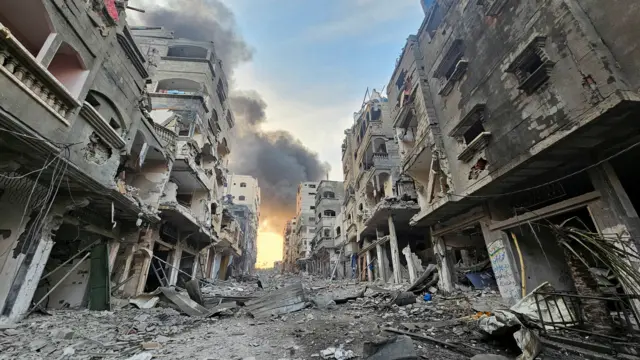
    View of a street completely in ruins. Shell of homes lining an ash covered street, smoke in the distanceImage source, Reuters

    Jonny from the UK asks: I've been told Hamas were offered a two-state solution by the UN in 1948 and have been offered peace by Israel four times since, is this true?

    Hamas is a relatively modern entity. It was founded only in 1987, at the time of the first Palestinian uprising. Its founding charter is committed to the destruction of the state of Israel.

    The origins of the Middle East conflict go back to the early 20th Century which saw decades of growing violence over the land between Palestinian Arabs and Jewish Zionists (people who wanted a Jewish state in the Middle East).

    At the end of the British Mandate period, in 1947, the UN recommended the partition of the land into two states – one for Arabs and one for Jews. This was rejected by Arabs and civil conflict followed.

    Israel declared its independence in 1948, leading to the first Arab-Israeli War. More than 700,000 Palestinians were forced or fled from their homes.

    Decades of conflict followed.

    It was only in 1993 that the Palestine Liberation Organisation – dominated by Hamas’s secular rival, Fatah - renounced the use of armed struggle and recognised Israel.

    It signed the Oslo Accords, which Palestinians see as having laid the path for pursuit of a two-state solution.

    Hamas has never been part of this process.

    Over the years, there have been moments when breakthroughs seemed possible but Israelis and Palestinians blame each other for the failure of rounds of peace talks.

    The last round of talks, brokered by the US, broke down in 2014.

  9. Why hasn't Hamas spent more money on ordinary Gazans?published at 16:53 BST 16 October 2023

    Yolande Knell
    BBC Middle East correspondent, reporting from Jerusalem

    Another question on Hamas, this time from Karin Zajac: If Hamas is formally governing Gaza, why hasn’t built up infrastructure in Gaza and helped its own people with all of the money it receives? Is it true that the leadership of Gaza does not even reside locally?

    After Hamas took full control of Gaza in 2007, forcing out Palestinian Authority security forces loyal to President Abbas, it did set up its own government in the Gaza Strip, employing tens of thousands of workers – from teachers to police officers.

    In recent times, it has relied on support from Qatar to pay these workers.

    Israel considers Hamas a terrorist group and after its takeover of Gaza, along with Egypt, it imposed a tight blockade on the Palestinian territory.

    This has contributed to what humanitarian experts have described to me as “de-development” – the deterioration of living conditions for Palestinians living there.

    Hamas has undoubtedly spent huge sums of money on building underground tunnels, bunkers and command centres, which could have been spent to ease conditions for civilians.

    It has relied on money given from allies like Iran.

    Headshot of Ismail HaniyehImage source, Reuters
    Image caption,

    The overall leader of Hamas, Ismail Haniyeh

    There have also been allegations of corruption of officials. The overall leader of Hamas, Ismail Haniyeh built a large villa in the refugee camp where he lived before he left the strip.

    Hamas has its top political leaders living outside the country. Ismail Haniyeh has recently been seen in Qatar.

    Inside Gaza, the leader is Yahya Sinwar while a shadowy figure, Mohammed Deif is the head of the Izz-al-Din Al-Qassam Brigades, the military wing of Hamas.

  10. Why are UK police arresting pro-Palestinian protesters?published at 16:40 BST 16 October 2023

    Ed Thomas
    Special correspondent, reporting from Salford

    A pro-Palestinian protest took place in London on SaturdayImage source, PA Media
    Image caption,

    A pro-Palestinian protest took place in London on Saturday

    ShengYu in Durham asks: Have arrests been made against pro-Palestinian protesters in the UK and if so, what are the police's justifications?

    Pro-Palestinian rallies have taken place across the UK, including Manchester, Liverpool, Bristol, Cambridge, Norwich, Coventry, Edinburgh and Swansea.

    On Saturday more than 1,000 police officers were deployed in London as large crowds marched to Downing Street.

    Afterwards, the Met Police said 15 people had been arrested for offences including assaults on emergency workers and setting off fireworks in public places.

    Before the march, police had warned that anyone showing support for Hamas, a proscribed (banned) terrorist organisation in the UK, would face arrest.

    Separately after a speech in Brighton on 8 October, a 22-year-old woman was arrested on suspicion of supporting a proscribed organisation, namely Harakat al-Muqawamah al-Islamiyyah (Hamas), under Section 12 of the Terrorism Act 2000. She has been released on bail.

    Home Secretary Suella Braverman said she expects the police to "use the full force of the law" against displays of support for Hamas.

  11. How is Islamic Jihad different from Hamas?published at 16:28 BST 16 October 2023

    Yolande Knell
    BBC Middle East correspondent, reporting from Jerusalem

    Michael Danylevych in Nottingham asks: What is the organisation Islamic Jihad and how is it different to Hamas?

    Islamic Jihad is the second biggest militant group in the Gaza Strip and is backed by Iran.

    It has a similar Islamist ideology to Hamas and is also committed to the destruction of the state of Israel. It is usually seen as more extreme than Hamas.

    In the past, it has often seemed that Hamas's actions are tempered by the fact that it has responsibilities as a governing power.

    Islamic Jihad operates independently from Hamas, but the bigger group has usually been able to rein in its actions when required.

    Islamic Jihad has its own militant wing, the Al Quds Brigade, and its own rocket arsenal.

    Very early on in this operation, Islamic Jihad said it was joining the Hamas action.

    Islamic Jihad militants held an anti-Israel military parade in October, marking the 36th anniversary of the movement's foundation in Gaza CityImage source, Reuters
    Image caption,

    Islamic Jihad militants held an anti-Israel military parade in October, marking the 36th anniversary of the movement's foundation in Gaza City

  12. Could Palestinians leave Gaza via the Mediterranean?published at 16:18 BST 16 October 2023

    Yolande Knell
    BBC Middle East correspondent, reporting from Jerusalem

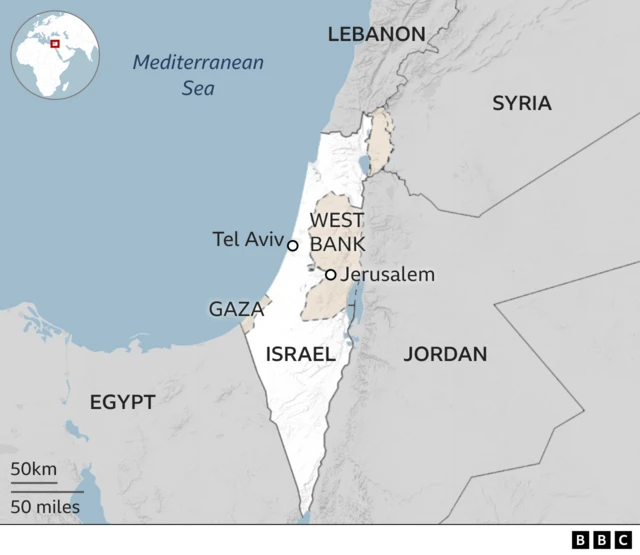
    A map showing Israel, its neighbouring countries and borders, and the sea
    Image caption,

    Leaving through the Mediterranean is not an option for Palestinians

    Richard in London asks: Would it be possible for Palestinians to travel to other Middle East countries by boats through the Mediterranean?

    No.

    Firstly, Israel imposes a full naval blockade on the Gaza Strip and currently has warships stationed off the coast.

    It would be easier for Gazans to pass to neighbouring Egypt through the Rafah crossing – if agreement can be reached on opening it.

    Cairo has, however, made clear it will not be able to accept large numbers of refugees fleeing from this crisis – for political and economic reasons.

  13. Your Questions Answered

    How does Hezbollah compare to Hamas?published at 16:02 BST 16 October 2023

    Hugo Bachega
    Reporting from southern Lebanon, near the Israel border

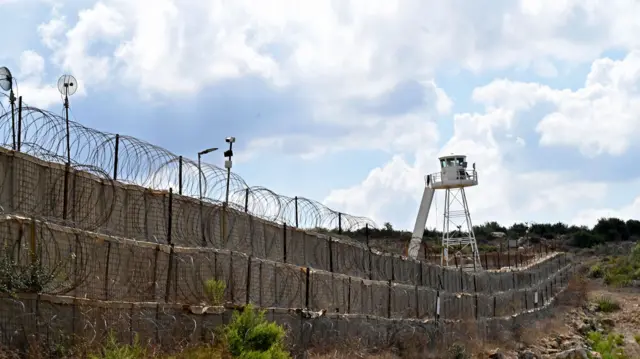
    A border fence with a watch towerImage source, EPA
    Image caption,

    The Israeli military has told residents to leave towns near the Lebanon border after attacks over the weekend

    Further north from the Gaza Strip, tensions rise between Lebanon and Israel. One reader wants to know: If Lebanon gets involved, how big a force is the Hezbollah compared to Hamas?

    Hezbollah - a Lebanese military, political, and social movement - has long been seen by Israel as a more formidable force than Hamas.

    The heavily armed Iranian-backed group has an estimated 130,000 rockets and missiles, according to the Center for Strategic and International Studies.

    Most of this arsenal is made up of small, man-portable and unguided surface-to-surface artillery rockets.

    But it also includes anti-aircraft and anti-ship missiles, as well as guided missiles capable of striking deep inside Israel.

    This is much more sophisticated than what Hamas has at its disposal.

    Hezbollah's leader has claimed to have 100,000 fighters, although independent estimates vary between 20,000-50,000. Many are well trained and battle hardened, and have fought in the Syrian civil war.

    Hamas, for comparison, has an estimated 30,000 fighters, according to Israel.

  14. Is Saudi Arabia helping Gaza?published at 15:48 BST 16 October 2023

    Frank Gardner
    BBC News, security correspondent in London

    US diplomat Antony Blinken met with Saudi Arabia's Crown Prince Mohammed bin Salman at the weekend, who said the siege of Gaza needs to come to an endImage source, EPA
    Image caption,

    US diplomat Antony Blinken met Saudi Arabia's Crown Prince Mohammed bin Salman at the weekend

    Lili in the US is wondering: Why is Saudi Arabia not helping the people in Gaza?

    I think the Saudis would strongly refute this allegation.

    They have very publicly called for an end to Israel's siege of Gaza, a respect for international humanitarian law, and a rejection of the targeting of civilians and the destruction of Gaza’s infrastructure.

    Saudi Arabia has also suspended its talks on normalisation of ties with Israel. If you're asking why haven't they sent aid to Gaza, the fact is Israel is not allowing in any aid at present.

    There is a large convoy of aid trucks waiting at Rafah on the Egyptian side of the border.

    I would expect that once the reconstruction of Gaza begins, Saudi Arabia and other Gulf Arab nations will be helping to finance it.

  15. Does Hamas build tunnels under hospitals and schools?published at 15:42 BST 16 October 2023

    Lyse Doucet
    Chief International Correspondent, in southern Israel

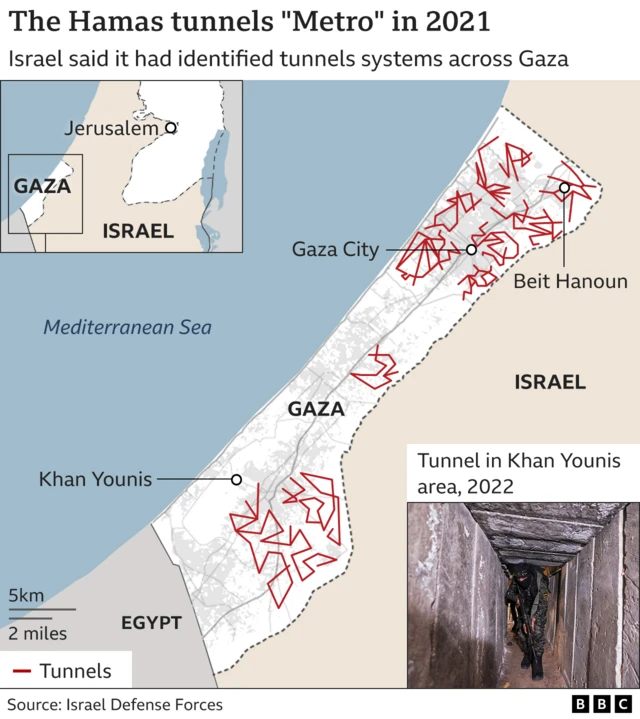
    Our next question comes from an anonymous reader, who asks: Please can you elaborate on where the Hamas tunnels are and if they do build them under hospitals and schools?

    Gaza’s tunnels are such a sprawling labyrinth that Israel’s military calls them the "Gaza Metro".

    They’re a vital part of Hamas operations. Tunnels are used to transport goods and people, store weapons and ammunition, and shelter command and control centres.

    They’re known to be heavily reinforced with concrete and wired with electricity. They’re so deep, as much as 100 feet (30 metres) that it's hard to say with complete certainty where they’re located.

    But such a vast underground network, on such a small sliver of land, seems likely to wind under densely packed neighbourhoods of homes, hospitals, and schools.

    There have been reports that some passages have entrances located on the bottom floors of houses, mosques, schools and other public buildings to allow militants to evade detection.

    The Israeli military, the IDF, has repeatedly accused Hamas of hiding inside these tunnels, effectively using them as human shields.

    Graphic showing network of tunnels in GazaImage source, .
  16. Could this lead to World War Three?published at 15:30 BST 16 October 2023

    Jeremy Bowen
    International editor, reporting from southern Israel

    Craig Johnson in Skelmersdale in the UK asks: If Iran gets directly involved in the ongoing Israel-Hamas conflict, would that prompt the US and its allies to directly join the war? And could this lead to a non-nuclear third world war?

    When asked about the possibility of intervention by Iran or its Lebanese ally Hezbollah, Joe Biden said: "Don't."

    The Americans just deployed two aircraft carrier battle groups to the eastern Mediterranean to send a very firm message to Iran to stay out.

    They're saying that if anyone intervenes, they will have American military might to reckon with, not just Israel's.

    One of the major fault lines in the Middle East runs between the US and its allies, and the Iranians and theirs.

    Both sides are aware of the risks. If it went from a cold to a hot war it would ignite a Middle East conflagration of global significance.

    The US moved the world's largest aircraft carrier, the Gerald R Ford, closer to Israel last weekImage source, Reuters
    Image caption,

    The US moved the world's largest aircraft carrier, the Gerald R Ford, closer to Israel last week

  17. Get your question answeredpublished at 15:25 BST 16 October 2023

    YQA graphicImage source, .

    If there is something you would like to know about the current conflict and its origins, send us a question, and we'll try to answer it in the next two hours or so.

    Please include your name, age and location with any submission.

  18. How did Israel not know about Hamas's attack?published at 15:17 BST 16 October 2023

    Yolande Knell
    BBC Middle East correspondent, reporting from Jerusalem

    The Israeli army with weapons raised, some standing some kneelingImage source, EPA

    An anonymous reader asks: How is it possible that the Israeli military have enough intelligence and surveillance to know exactly where Hamas is stationed in Gaza, but it didn't know Hamas were going to attack Israel or see any warning signs of the attack?

    In the past, Israel's military has opened up its control centre for surveillance of Gaza to journalists, and it's clear that it has excellent real-time information about movements on the ground from drones and other cameras.

    It also has a vast network of informants.

    We saw in May's fighting with Islamic Jihad just how accurate Israel's information on the whereabouts of leading militants could be.

    In briefings, Israeli military officials accept there have been major intelligence and security failings when it comes to the unprecedented, deadly attack by Hamas.

    However, we can rely on the fact that it has an accurate, long list of Hamas targets that it will go after as soon as it gets boots on the ground.

  19. Your Questions Answered

    Why are the United Nations, and other countries, not intervening?published at 15:15 BST 16 October 2023

    James Landale
    Diplomatic correspondent, in London

    Rishi Sunak headshotImage source, PA Media

    Sadul Hoque from London asks: If everyone has agreed that Israel has been killing civilians and will kill a lot more in these new strikes, why are the UN and other countries not intervening?

    The main reason why many countries are not urging Israel to stop its airstrikes is because they accept the country has been attacked by Hamas and has a right to defend itself.

    Where they are urging restraint is about how Israel defends itself.

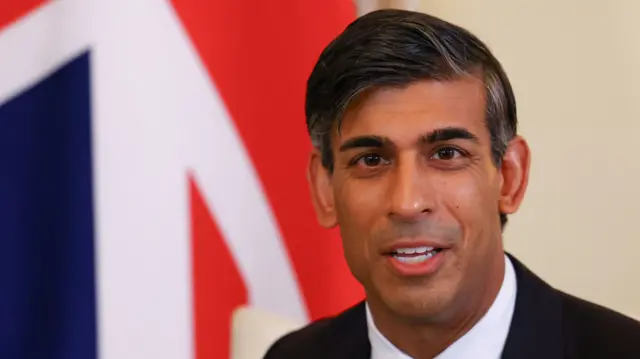
    UK Prime Minister Rishi Sunak said this morning: "I've raised with the Israeli prime minister the need to minimise the impact on civilians as best we can."

    The United Nations too has urged Israel to avoid civilian casualties.

    The UN Secretary General Antonio Guterres said a few days ago: "International humanitarian law and human rights law must be respected and upheld; civilians must be protected and also never used as shields."

    Israel insists its warplanes and artillery are striking Hamas targets in Gaza. But many civilians are indeed being killed and injured in those strikes.

    Palestinians say that is because the Israeli strikes are excessive and indiscriminate. Israel says it is because Hamas uses civilians as human shields.