Northern Lights dance across UK sky on Halloween night

A spectacular display of bright green lit up the sky in Nairn, Highland on Halloween night
- Published
Stargazers around the UK were treated to the vivid colours of the aurora borealis on Saturday night.
As cloud and rain on the weather front cleared southwards, parts of Scotland and Northern Ireland were perfectly placed to catch the display.
The eerie glow provided a fitting finale to spookiest night of the year, delighting skywatchers and photographers alike.
Aurora activity continued into Sunday night, especially across northern skies, but resulted in less intense displays.

Skygazers were treated to a vibrant show in Nairn, Highland

A very bright display of green was spotted in Busta, Shetland Islands

Bright green lit up the night sky in Jedburgh, Scottish Borders
What does the colour of the aurora tell us?
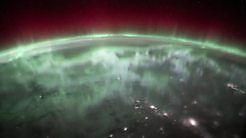
When charged particles from the Sun are guided by Earth's magnetic field towards the poles, they collide with gases high in the atmosphere.
As they do, they release energy as light. The colour that appears depends on two things: which gas is hit and how high up the collision happens.
Green occurs between 60 and 120 miles (100 and 190km) above Earth, when solar energy collides with oxygen.
Red is formed when solar particles hit oxygen at much higher altitudes - from 150 miles (240km).
Purple occurs between 60 and 100 miles (100 and 160km) up, when solar energy hits nitrogen rather than oxygen.
Blue is the rarest of all and appears below 60 miles (100km) and is caused by solar energy hitting nitrogen.

The aurora reflecting off the water in Pooley Bridge, Cumbria

Wales also caught a glimpse of the show, with bright colours stretching across the sky in Dolgellau, Gwynedd.
- Published1 day ago

- Published13 February 2025
- Published11 October


