Getting around
People travel from one place to another for lots of different reasons including to:
- buy and sell goods
- visit family and friends
- travel to work or school
- go on holiday
However, different forms of transport can have varying environmental impacts. Some forms of transport rely on fossil fuels such as oil and gas. Burning these fuels releases greenhouse gases into the atmosphere. This can contribute to climate change.
What is a carbon footprint?
A carbon footprint is the total amount of greenhouse gases, mainly carbon dioxide (CO₂) released into the atmosphere as a result of human activities, like driving cars, and using electricity.

Some of the factors that can contribute to a person's carbon footprint include:
- The amount of electricity and gas used at home, including things like heating, lighting and household appliances.
- The distance travelled by car, aeroplane or other forms of transport that require an engine.
- The type of food consumed, and where it is produced.
- The amount of waste produced, and how it is disposed of or recycled.
- The products purchased and where they are manufactured.
Travel and greenhouse gases
Travelling in vehicles such as cars or planes uses fuels such as petrol or diesel. When these fuels are burned, greenhouse gases are released into the atmosphere.
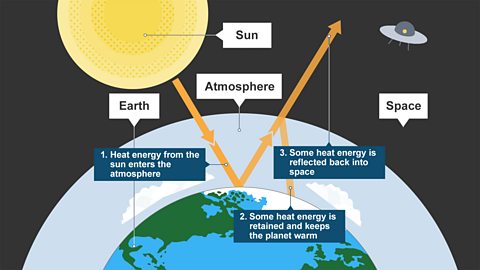
An increase in these gases in the atmosphere causes more heat from the sun to be trapped, leading to rising temperatures and changes to the climate. This can affect our A community of living things that are all connected to one another, and depend on one another. and their surroundings, potentially resulting in the following possible outcomes:
- More frequent and severe extreme weather events, for example, storms and hurricanes.
- Rising temperatures can contribute to the melting of glaciers and ice sheets, which may cause sea levels to rise.
- The extraction of fossil fuels can affect habitats and wildlife as land may need to be cleared.
- Hotter and drier conditions may increase the risk of desertification in some regions, where fertile land gradually becomes less productive.
Travel and sustainability
Travelling more sustainably may involve using active travel or choosing alternative forms of transport that produce fewer greenhouse gas emissions.
Active travel
Moving from one place to another using physical activity, like walking, cycling, or scooting, instead of using vehicles like cars or buses.
Electric vehicles and e-bikes
Electric or hybrid vehicles run on electricity, which is sometimes powered by renewable sources like solar or wind power. This can reduce greenhouse gas emissions and air pollution compared with some vehicles that rely entirely on petrol or diesel. Hybrid vehicles combine an electric motor with a petrol engine and may use less fuel in some driving conditions.
However, electric and hybrid vehicles can be more expensive to buy, and the environmental impact of electricity generation and battery production varies depending on how and where they are produced. Buses and trains can also be powered by electricity or other cleaner fuels.
E-bikes use electricity, which is cleaner than petrol or diesel. They produce fewer emissions, helping to reduce air pollution and greenhouse gases.
Activity: Sustainable travel options
Sustainable holidays
Different travel choices can have different environmental impacts. Some people consider sustainability when planning trips. Some examples include:
Using public transport, such as trains or buses.
Choosing direct flights where available, as these may use less fuel per passenger mile than flights with multiple connections.
Going to local destinations or nearby regions instead of travelling long distances.
Taking part in activities such as walking, cycling, or wildlife watching, which typically require fewer resources than some other leisure activities.
More on Energy and transport
Find out more by working through a topic
- count1 of 3

- count2 of 3