Covid-19: Delta doubles hospital risk and US spies unsure of virus origin
Here are five things you need to know about the coronavirus pandemic this Saturday morning. We'll have another update for you tomorrow.
1. Delta patients twice as likely to need hospital
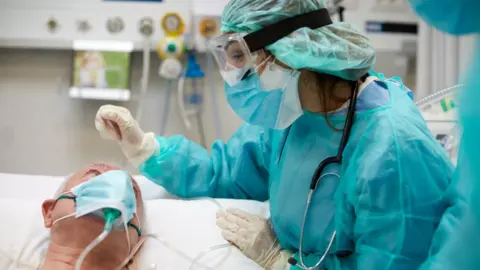
People are twice as likely to need hospital care if they are sick with Delta variant of Covid, rather than the Alpha, or Kent, variant which was previously common in the UK. That's according to data from England suggests which has been published in the Lancet medical journal. Experts say this reinforces why it is important to be fully jabbed, with vaccination cutting the risk of serious illness from either variant.

 Getty Images
2. High virus levels 'highly likely' in schools
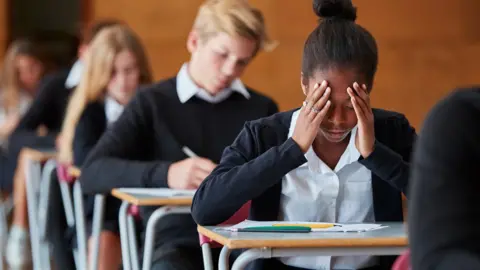
Scientists advising the government say it is "highly likely" that high levels of coronavirus will be seen in schools in England by the end of September. Sage experts say it would be "sensible" for the government to plan for it. It follows cases in Scotland reaching a record high since schools reopened for the autumn. Sage says it is difficult to work out if schools are drivers of transmission, or simply reflecting the spread of the virus in their communities. As pupils begin to head back to school here is a guide to Covid safety.
 Gety
Gety3. US spy agencies 'inconclusive' on Covid origin
America's intelligence community has been unable to determine the origins of Covid and is split on whether it leaked from a lab or developed naturally, a new report says. But the report, issued by the office which oversees the 18 US spy agencies, did conclusively determine that the virus was not developed as a biological weapon. China's foreign minister called the report "anti-science" while President Joe Biden has criticised China for not co-operating with the investigation.
4. The children struggling to remember how to write
After 17 months without attending a class, online or offline, Radhika Kumari says she struggles to remember how to write her Hindi alphabet. She is one of many pupils in poorer areas of India where the digital divide is stark - in her village there is no internet - and pupils of government-run schools have often fallen behind. Read more of Radhika's story and others like her here.

5. Festivals are back - but are they safe?
 Getty Images
For thousands of people heading to music festivals across the country this weekend there will be one experience they hope to miss - Covid. Jay Luffer, who has gone to Reading Festival and All Points East this weekend, says he thinks catching Covid is "inevitable". But has still packed his masks and lateral flow tests to try to be safe. For 20-year-old Jack Stacey going to Boardmasters festival earlier this month has "not been worth it" as he and all 20 friends he went with caught the virus. "I was always under the impression for me it would just be a little cough because I'm young - but I haven't been able to get out of bed," he says.

And don't forget...
... you can find more information, advice and guides on our coronavirus page.
And with a study suggesting the Delta variant is more likely to result in hospital treatment you can find out more about variants here.


What questions do you have about coronavirus?
In some cases, your question will be published, displaying your name, age and location as you provide it, unless you state otherwise. Your contact details will never be published. Please ensure you have read our terms & conditions and privacy policy.
Use this form to ask your question:
If you are reading this page and can't see the form you will need to visit the mobile version of the BBC website to submit your question or send them via email to YourQuestions@bbc.co.uk. Please include your name, age and location with any question you send in.
