£100,000 fine for Birmingham hospital group fined over illegal human tissue storage

 BBC
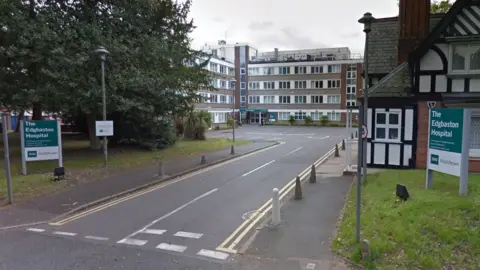
A hospital group has been fined £100,000 after human tissue was stored illegally for at least 11 years.
Circle Health Group said the samples had been collected under the direction of a surgeon working at a Birmingham hospital without a Human Tissue Authority licence.
Derek McMinn was suspended in 2020.
The firm admitted one charge of breaching a licence requirement relating to the Human Tissue Act 2004.
Edgbaston Hospital also subsequently allowed the tissue to be removed from the hospital, under the direction of Mr McMinn, to a private address which was also not covered by an appropriate licence, police said.
Circle Health Group Limited (formerly BMI Healthcare) failed to make any reasonable inquiries about whether such a licence existed, said West Mercia Police, who investigated the case with West Midlands Police and the Human Tissue Authority.
The inappropriate storage of the tissue at the hospital was highlighted in 2015 and 2019 following an internal audit, the force said, adding the response by hospital management was "wholly inadequate in addressing failings and it was evident there was a poor understanding and interpretation of the Human Tissue Act".
The act states it is illegal to remove, store or use human tissue without consent as well as storing tissue or organs for a purpose not stated.
It is believed Mr McMinn, who invented a hip treatment used on tennis star Sir Andy Murray, began retaining tissue before the hospital was owned by BMI from 2008. No criminal charges were brought against Mr McMinn.
The number of patients involved cannot be known due to an eight-year limit on how long patient records are kept in the independent sector.
 Google
Det Insp Mark Walters, senior investigating officer for the force, said it was an unusual case and prosecutions under the Human Tissue Act were rare.
"The serious breach of the licencing requirements by the Circle Health Group over a prolonged period of time undermines the trust placed in the hospital by patients and their families that their human tissue would be dealt with appropriately, ethically and in accordance with the law," he said.
A spokesperson for Edgbaston Hospital told BBC News: "This matter relates to a historic practice directed by a former consultant who no longer sees patients at our facility.
"We acknowledge that the previous management failed to obtain a licence from the HTA to temporarily store tissue on behalf of the consultant for research purposes.
"The hospital is now under new management and ownership and has seen a transformation in quality and safety, with a strong track record of delivering rapid, high-quality treatment for local patients."
The company said the practice ceased in 2019 once the matter was brought to the attention of central clinical teams.
The firm's guilty plea acknowledged that the site had failed to apply for a licence to temporarily store tissue and there was no suggestion BMI would not have obtained such a licence if it had done so, the company added.
The Care Quality Commission rated the hospital as requiring improvement after its last inspection in a report published in January 2020.
Dr Colin Sullivan, chief executive of the Human Tissue Authority, added: "I welcome the conclusion of this case and the successful prosecution of Circle Health Group Limited.
"This sends a strong message to anyone wanting to use human tissue that they must follow the law."

Follow BBC West Midlands on Facebook, X and Instagram. Send your story ideas to: newsonline.westmidlands@bbc.co.uk
