Blackpool-Chernobyl comparison councillor defends comments

 PA Media
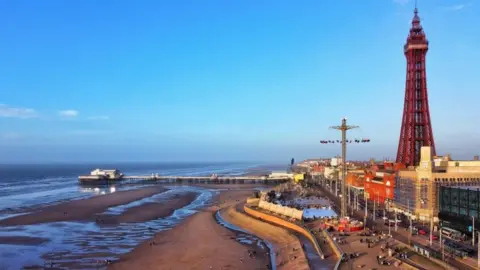
A councillor who compared Blackpool to the scene of a nuclear meltdown has defended his comments.
A row broke out after Paul Hayhurst said Blackpool "looks like Chernobyl no matter how much money you put in there".
The independent Fylde councillor has now insisted that it was "not intended as an attack on Blackpool".
The Chernobyl remark was made during a debate about devolution at neighbouring Fylde Council.
The remarks were branded "sour grapes" and disrespectful by Blackpool Council leader Lynn Williams, the Local Democracy Reporting Service said.
In a statement Mr Hayhurst said: "My speech was not intended as an attack on Blackpool, as has been widely reported, but was a warning to Fylde that devolution will almost certainly mean that Fylde will be engulfed by Blackpool and become part of a Greater Blackpool."
Both Blackpool and Fylde Council voted to support the draft devolution deal for Lancashire, which involves all the authorities in the county, including Blackpool, working together to bid for government funding.
'Last resort'
He added: "Cosying up to Blackpool will give the wrong message to the government and will, no doubt, ease the way for Fylde to be eventually consumed by its larger neighbour.
"I am sure that this will be hugely unpopular by the council taxpayers in Fylde who will end up paying for Blackpool's deprivation and failed tourism industry."
He also added the lifting of Covid restrictions meant Blackpool would "revert to its normal role as the last resort".
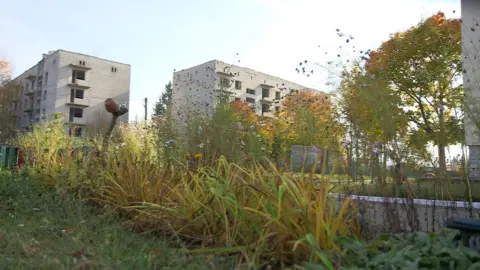
The Chernobyl disaster was an infamous 1986 nuclear accident in the former Soviet Union that saw the area abandoned amid concerns about contamination and radiation poisoning.
Blackpool regularly hosts children for holidays from Belarus, where families are still suffering from the after-effects of Chernobyl.

