£2m cancer research boost for Beatson Institute

 PAUL ZANRE
Scientists in Glasgow have been awarded almost £2m to look into new ways to treat lung and pancreatic cancer.
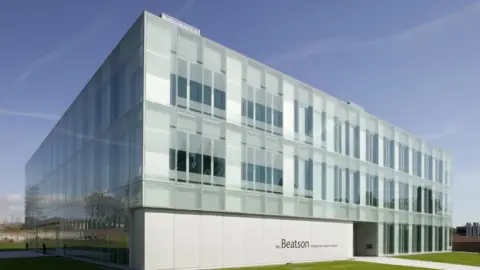
The Programme Award from Cancer Research UK will support pioneering research at the Beatson Institute.
It will examine how a specific protein complex, called eIF4F, helps cells grow, multiply and survive.
Understanding its role could help them develop new drugs to target it and stop tumours growing in patients with lung, pancreatic or bowel cancer.
Professor Jim Norman, deputy director of the Cancer Research UK Beatson Institute, said: "These cells and the proteins they produce make up the 'scaffold' that holds tumours in place.
"It's this scaffold that makes pancreatic and lung tumours so difficult to treat because it makes it hard for drugs and the immune system to get to the tumours to be able to destroy them.
"We want to find out if by blocking eIF4F, we could stop tumours from growing.
"If by preventing the stromal cells from making proteins the tumours need to build this protective scaffold, it becomes easier to destroy them."
 SPL
Cancer Research UK Programme Awards provide long-term support to scientists to carry out research that will help them better understand cancer and bring benefits to cancer patients.
Matt Kaiser, Cancer Research UK's head of discovery research, said: "Pancreatic and lung cancers are an important strategic focus for Cancer Research UK because they are notoriously hard to treat.
"That is why we have committed to increase investment in these cancers, where survival remains low."
Victoria Steven, Cancer Research UK's spokeswoman in Scotland, said: "To ensure we make a real difference in hard-to-treat cancers we only fund the best research, as determined by international experts.
"So this £2m award is fantastic recognition of the world-leading research being carried out by Professor Norman, Professor Sansom and their team at Glasgow's CRUK Beatson Institute."
